If you’re not sure how to zest a lemon, you’re in the right place! This simple technique is great for those lemon desserts and baked goods everyone loves. Salad dressings become brighter and have a more complex array of flavors when you add lemon zest either in place of or along with lemon juice. The trick is in knowing how to turn that lemon peel into that zested lemon you need, but that’s easy to do.
This post may contain affiliate links. Please see our disclaimer for details.

Table of Contents
Why You’ll Love This Recipe
- Quick & Easy: Lemon zest is quick and easy to make. It takes minutes!
- Flavorful: Fresh lemon zest can go a long way. It’s a great way to add color and flavor to your favorite recipes.
What Is Lemon Zest?
Lemon zest is what you get when you scrape that bright yellow layer off of lemons. Yes, it’s edible and absolutely amazing, adding more freshness than simply adding lemon juice. That’s because you’re getting the essential oils from the lemon, too. It’s also less acidic, which makes for a good balance. Be careful not to scrape off beneath that, though, for the bitter white pith underneath will not help your recipes.
Nutrition For Mental Wellness
Lemon peel contains a good amount of fiber and antioxidants, including vitamin C and D-limonene. It also contains small amounts of potassium, calcium, and magnesium. D-limonene is the naturally occurring scent of lemon peel.
As a nutritionist, I am passionate about how food can impact your mental health. An animal study found that D-limonene can have an antidepressant-like effect, reducing the impact of stress on learning and memory tests.
Ingredients + Notes

- Lemon: The quality of your lemons is important. Start by selecting fresh lemons that are firm and unblemished. They should be a nice bright yellow, not pale. And of greatest importance, you must wash them first since they’ve come into contact with all sorts of dirt and germs before you bought them. Organic lemons are a great option as you will be consuming the skin.
How To Zest A Lemon: 5 Easy Ways
Zesting a lemon is so easy. You can use a common kitchen tool such as a veggie peeler. Alternatively, you can zest citrus fruits with a more specialized microplane grater or ribbon zester.
1. Microplane Grater
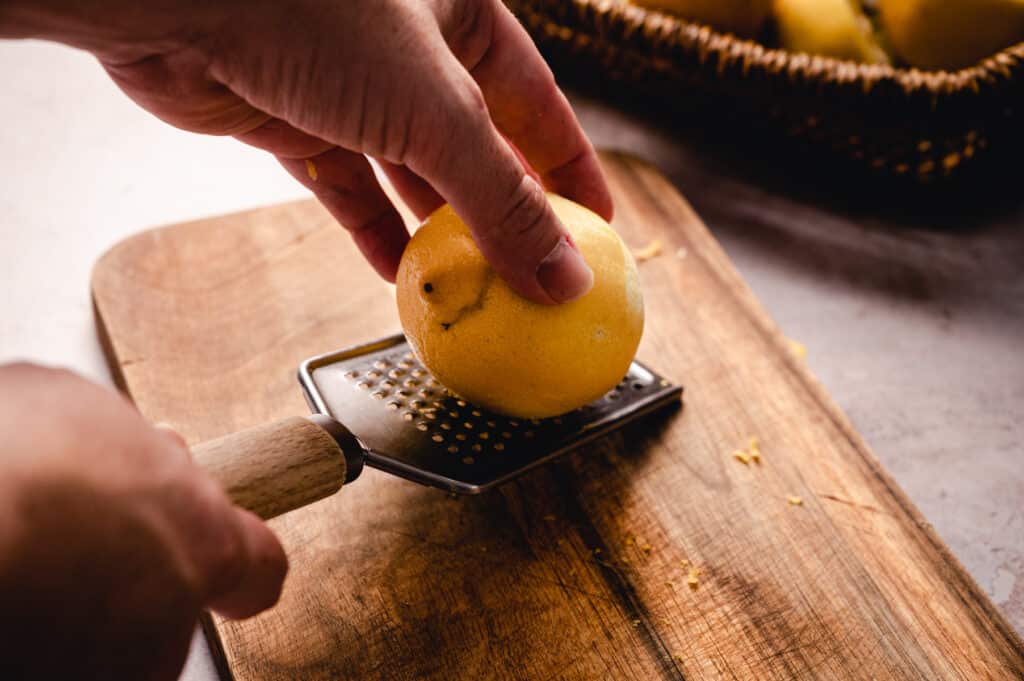
- Hold a microplane citrus zester in one hand and place the bottom on a flat surface, such as your countertop. Hold the lemon in your other hand.
- Press the peel of the lemon into the microplane, sliding it up and down, removing the lemon zest.
- Slowly turn the lemon with each pass to zest the entire lemon. (Or until you have enough citrus zest for your recipe.)
2. Citrus Ribbon Zester
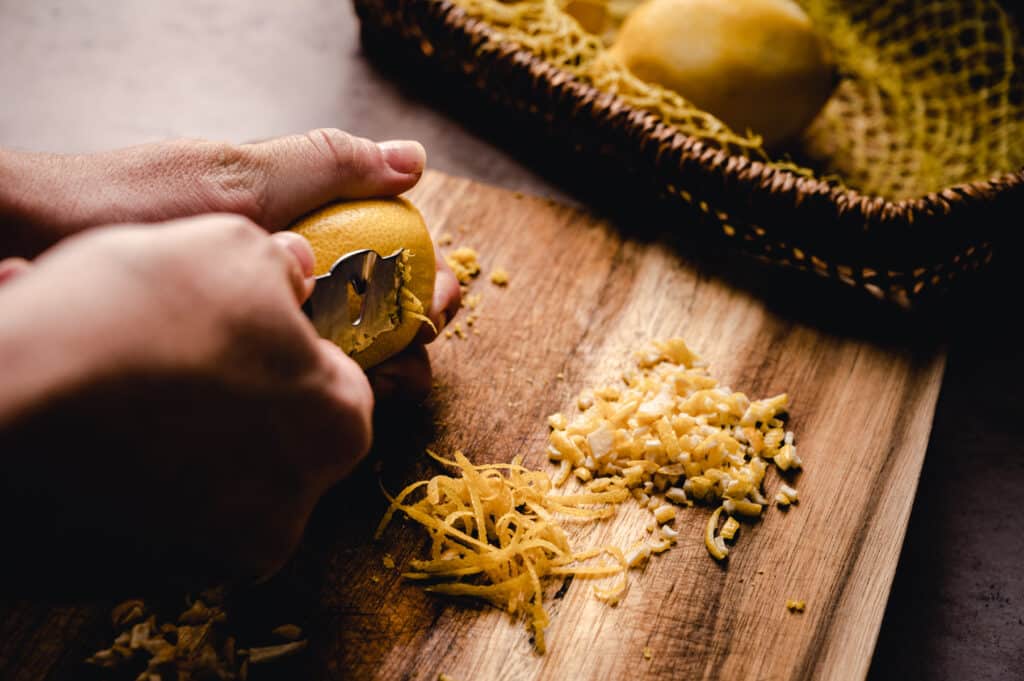
- Hold the citrus ribbon zester in your non-dominant hand and the lemon in your dominant hand.
- Press the skin of the lemon zester into the lemon and scrape downwards or sideways (whichever feels more natural).
- Repeat this motion until you have a tablespoon of the zest of a lemon. (Or whatever amount you need for your specific recipe.)
3. Box Grater
Would you like to save this?
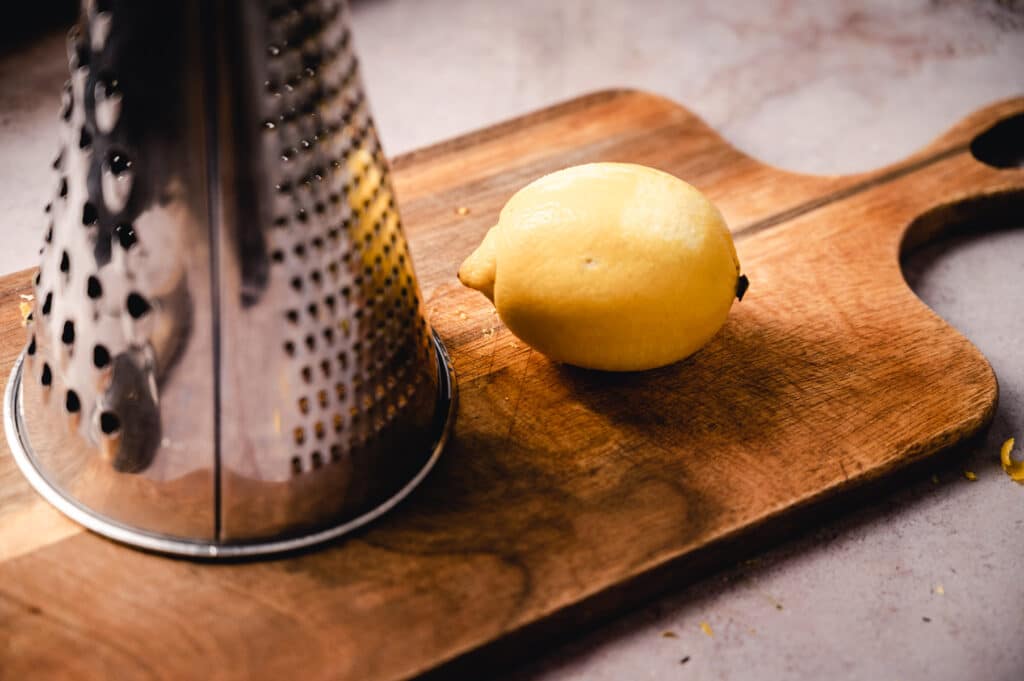
- Hold your box grater in one hand with the fine side up.
- Place the bottom edge on a flat surface like your countertop or a cutting board.
- Hold the lemon in your other hand and press the lemon against the grater.
- Pressing against the cheese grater, slide the lemon down and then back up. (Just like you might cheese or carrots.)
- Continue this process until you have enough lemon zest for your recipe.
4. Vegetable Peeler
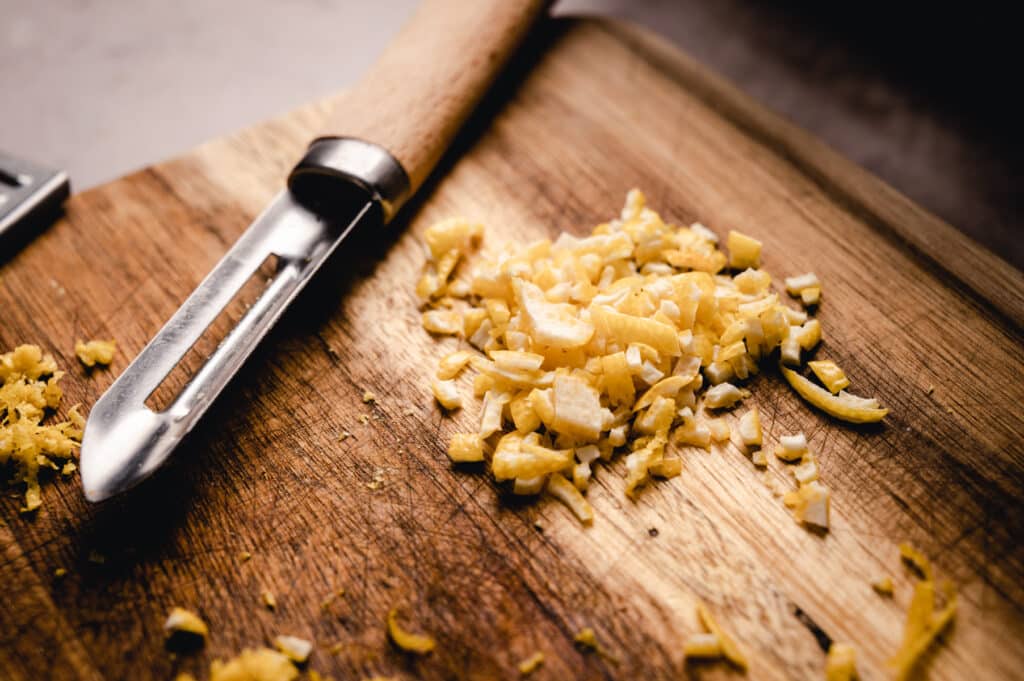
- Hold the veggie peeler in one hand and a lemon in the other.
- Peel off small bits of lemon skin carefully.
- Repeat this a number of times until you have several small lemon peel pieces.
- Chop them up finely using a sharp knife.
- Continue to mince until you have enough citrus zest for your recipe.
5. Paring Knife
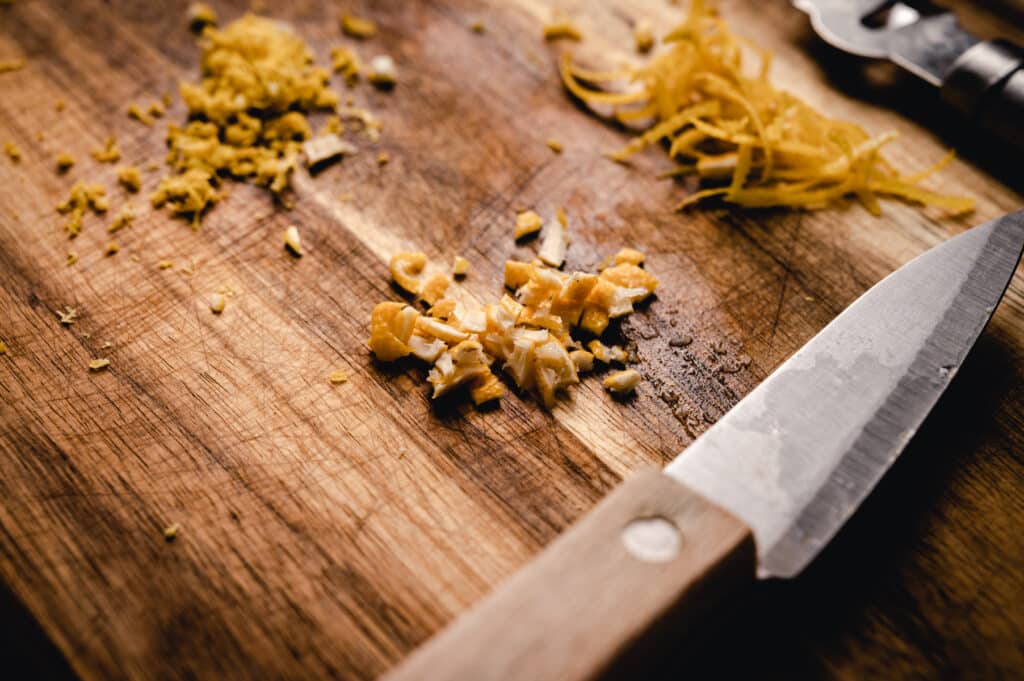
- Hold a lemon in one hand and a sharp paring knife in the other.
- Cut off thin, long pieces of lemon skin. (You want to ensure they are thin pieces. Leave the white pith on the lemon itself.)
- Finely chop the thin strips of the yellow part of the peel.
Serving Ideas
You can use lemon zest in any recipe that calls for lemon juice. But don’t stop there! Feel free to use it in any recipe that could do with a brighter and tangier taste. Lemon zest is a superb cocktail garnish and is great in baked goods, oatmeal, pancakes, smoothies, dressings, sauces, and marinades. Even simply adding it to your water will give it a burst of freshness that will help ensure you drink up enough hydration for the day.
- Baked Goods: Lemon zest is a must in these lemon poppy seed muffins and on top of these vegan raspberry scones.
- Drinks: Add citrus zest or ribbons to raspberry lemonade recipe, fresh ginger lemonade, or best cranberry lemonade.
Can I Zest Lemon Ahead Of Time?
Zesting your lemon ahead of time is a smart trick in the kitchen. You’ll always have it ready when you need it, and you can use this trick with other types of citrus fruit, too.
Storage Tips
Make your own lemon zest, and store any unused portion in your fridge if you plan to use it quickly. It will lose its flavor the longer it sits there, even when you put it in a small, airtight container or a resealable silicone bag. You’ll have about a week or so before it’s lost that wonderful flavor.
Freezing Tips
Unless you’re going to use that lemon zest in the next day or two, a better idea is to freeze it. You should lay it out in a single layer atop parchment or wax paper, then freeze it. Once frozen, you can slide it into a freezer bag. You’ll want to label it with the date so you can use it up while it’s still potent. Another way is to freeze it into your ice cube trays, which makes it great for cocktails or even refreshing mocktails. Either way, be sure you use your frozen lemon zest within 6 months.
FAQ
The easiest way to zest a lemon is to use a microplane, citrus ribbon zester, box grater, or vegetable peeler. These kitchen tools can make short work of zesting a lemon for your recipes.
Without a zester, you can use your box grater or a vegetable peeler to help you zest a lemon with ease.
Lemon zest comes from the bright yellow peel on the outside. You don’t want the bitter white pith just underneath it. You only want that bright yellow portion to add flavor to your foods.
Yes, grated lemon peel is one and the same with lemon zest. Zest just sounds fancy, but it’s incredibly easy for even beginner cooks to make and use in any recipe.
Dried versions of lemon zest exist, though your best option for the brightest and tangiest lemony flavors is to use these simple methods for zesting a lemon yourself.


If you learned How To Zest A Lemon from this tutorial, please leave a 🌟 star rating and let me know how it went in the 📝 comments below. Thanks for visiting!
Recipe

How To Zest A Lemon
Ingredients
- 1 large Lemon, washed
Instructions
Microplane Grater
- Hold a microplane in one hand and place the bottom on a flat surface, such as your countertop. Hold the lemon in your other hand.
- Press the lemon into the microplane, sliding it up and down, removing the lemon zest.
- Slowly turn the lemon with each pass to zest the entire lemon. (Or until you have enough citrus zest for your recipe.)
Citrus Ribbon Zester
- Hold the citrus ribbon zester in your non-dominant hand and the lemon in your dominant hand.
- Press the ribbon zester into the lemon and scrape downwards or sideways (whichever feels more natural).
- Repeat this motion until you have one tablespoon of zest. (Or whatever amount you need for your specific recipe.)
Box Grater
- Hold your box grater in one hand with the fine side up.
- Place the bottom edge on a flat surface like your countertop or a cutting board.
- Hold the lemon in your other hand and press orange against the grater.
- Pressing against the cheese grater, slide the lemon down and then back up. (Just like you might cheese or carrots.)
- Continue this process until you have enough lemon zest for your recipe.
Vegetable Peeler
- Hold the veggie peeler in one hand and a lemon in the other.
- Carefully peel off small bits of lemon skin.
- Repeat this a number of times until you have several small lemon peel pieces.
- Chop them up finely with a sharp knife.
- Continue to mince until you have enough citrus zest for your recipe.
Paring Knife
- Hold a lemon in one hand and a sharp paring knife in the other.
- Cut off thin long pieces of lemon skin. (You want to ensure they are thin pieces. Leave the white pith on the lemon itself.)
- Finely chop the thin strips of the yellow part of the peel.
Video
Notes
Nutrition
Did you make this recipe?
We’d love to see! Tag @raepublic on Instagram!
Reference
Alkanat, M., & Alkanat, H. Ö. (2024). D-Limonene reduces depression-like behaviour and enhances learning and memory through an anti-neuroinflammatory mechanism in male rats subjected to chronic restraint stress. The European journal of neuroscience, 60(4), 4491–4502. https://doi.org/10.1111/ejn.16455